
Sitting Bull
c. 1831-1890. Hunkpapa Lakota leader
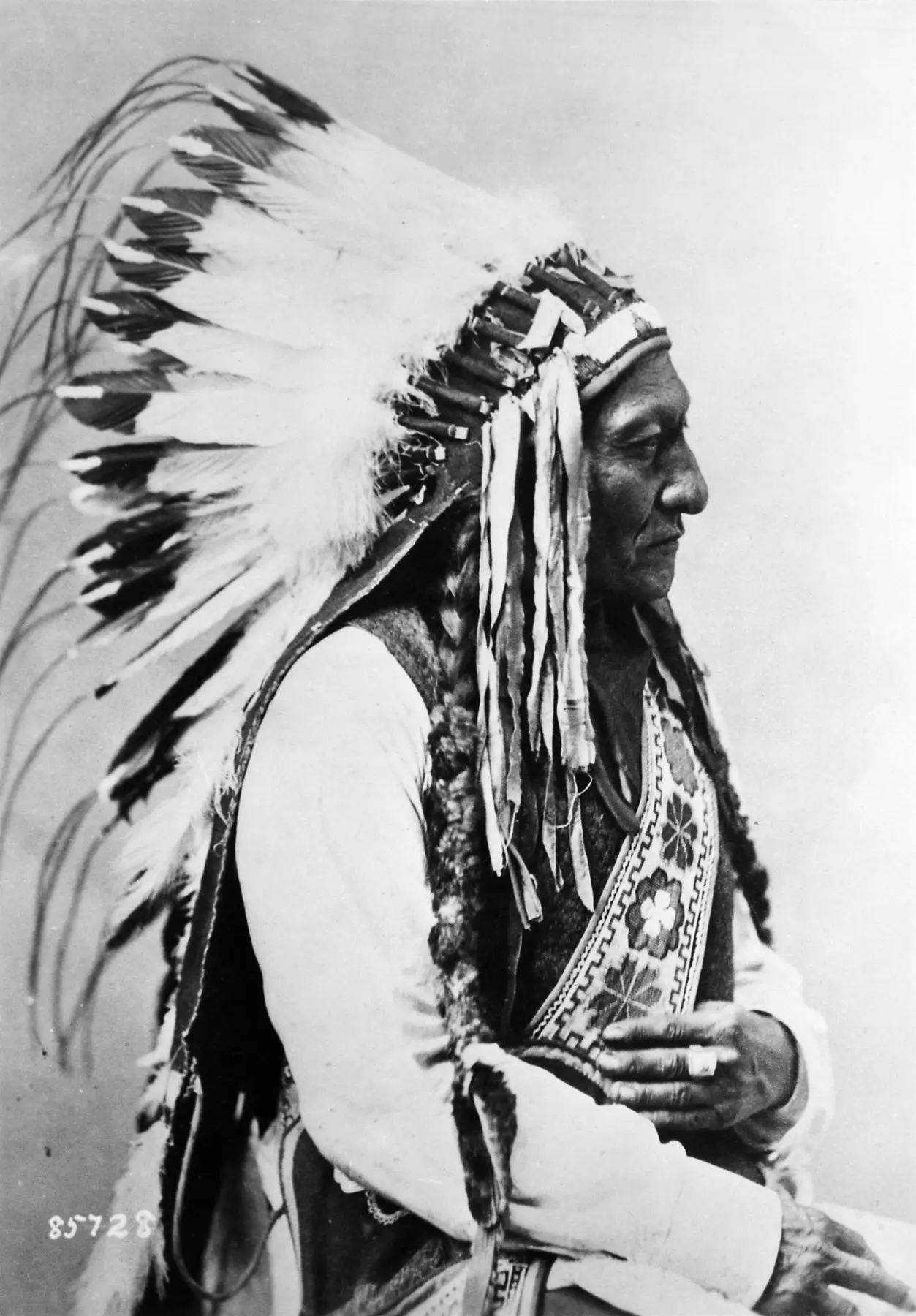
Sitting Bull never lived in Deadwood and his story should not be told as a local attraction. He belongs in the history of this place because of what the Black Hills meant to his people, and because of what the rush that created the town set in motion.
The National Park Service believes he was born between about 1831 and 1837 into a prominent Hunkpapa Lakota family, near the confluence of the Grand and Missouri rivers in present-day South Dakota.
Against the treaty
In 1868 Red Cloud and other leaders signed the Treaty of Fort Laramie, which set aside a reservation in the western half of today’s South Dakota including what the Park Service calls the Lakotas’ sacred Paha Sapa. Sitting Bull refused to take part in the negotiations and did not consider himself bound by the result. He became a leader of the non-treaty Lakotas, many of whom lived in the Unceded Territory.
Gold and war
After the 1874 Custer expedition, the United States tried to buy the Hills and the Lakota refused. In 1875 the government closed the Unceded Territory, and it ordered all Lakotas onto reservations by January 31, 1876, or be treated as hostile. Sitting Bull and his followers stayed out. On June 25, 1876, the 7th Cavalry attacked his camp along the Little Bighorn. A popular image has him leading the battle, but the Park Service says he did not fight in it himself.
Exile and death
Sitting Bull led his followers north to Canada in 1877. He surrendered on July 20, 1881, at Fort Buford, Dakota Territory. On December 15, 1890, during the Ghost Dance period, Lakota Indian Police came to his cabin to arrest him. A crowd gathered, gunfire broke out, and he was shot and killed.
The unfinished part
The land question he refused to concede is not over. Sioux tribes still decline the money set aside after the 1980 Supreme Court ruling and insist the Black Hills were never for sale.
Sources
- Sitting Bull, Little Bighorn Battlefield NM, National Park Service
- Story of the Battle, Little Bighorn Battlefield NM, National Park Service
- Fort Laramie in 1876, National Park Service
- President Ulysses S. Grant and Federal Indian Policy, National Park Service
- Why the Sioux Are Refusing $1.3 Billion, PBS NewsHour