
HBO's Deadwood and the Real Deadwood
David Milch's series made Deadwood famous for a new generation. Here is what it borrowed, what it invented and what it did for the town.
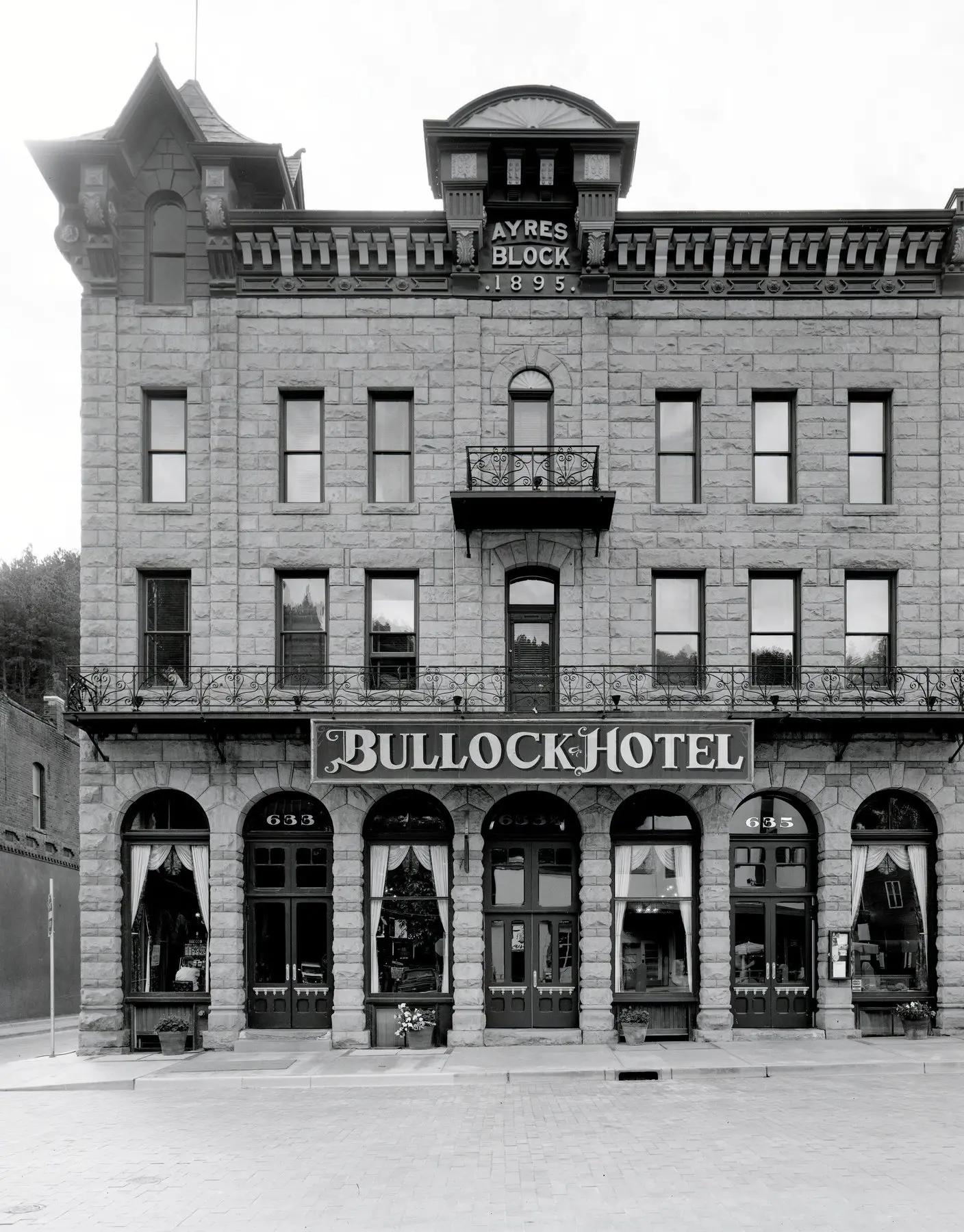
Deadwood, David Milch’s television series, ran on HBO from March 21, 2004, to August 27, 2006: three seasons, twelve episodes each. It won eight Emmys from 28 nominations. Milch had first planned to set the story in ancient Rome, moving it when HBO began developing Rome, and turned to the Black Hills instead. On May 31, 2019, HBO aired a follow-up film, set in 1889.
The series was never made in Deadwood. Much of it was shot at Melody Ranch in Santa Clarita Valley, California, a Western set established in 1915 where Gunsmoke and High Noon were also filmed. The film returned there too. A visitor to the real town will not find that set, and the streets here look different. Few of the earliest wooden-front buildings survived the fire of 1879 and the flood of 1883.
What it got right
Milch did his homework. According to Mental Floss, he read local newspapers, residents’ diaries and formal histories, including Watson Parker’s Deadwood: The Golden Years, and took material from Estelline Bennett’s Old Deadwood Days and John S. McClintock’s Pioneer Days of the Black Hills. Many of the series’ names are real people and many basic events are real. Hickok was shot at the No. 10 on August 2, 1876, and McCall was indeed acquitted by an improvised court the next day. Bullock and Star did arrive within a day or so of the shooting with their hardware. The Gem, a smallpox scare and George Hearst’s real interest in the region are all on the record. Hearst reached the Hills in October 1877.
The camp’s lack of legal standing is also real. It stood on land the 1868 treaty reserved for the Sioux, a fact worth keeping in mind for a story told mainly through its white settlers.
What it changed
Characters and timelines were reworked freely. Doc Cochran combines several Deadwood physicians. Trixie draws on several women at the Gem. Joanie Stubbs is loosely based on Dora DuFran.
Al Swearengen is the biggest case. The television character gains depth and even a kind of grim charm. The real man, HistoryNet reports, was arrested in 1879 for beating his wife and fled a warrant in 1889 after threatening a later wife with a straight razor. Sources also describe women at the Gem recruited with false promises of legitimate work. He did not die in Deadwood, as the 2019 film has it, but in Denver in 1904. It is reasonable to enjoy Ian McShane’s performance, and also to remember the real women who paid for the real man’s business.
Seth Bullock is a heroic lawman on the show. The real Bullock held the office of Lawrence County sheriff for about nine months in 1877, and South Dakota History credits his reputation to outwitting or intimidating opponents rather than gunplay. His friendship with Roosevelt is well documented, as is his later public career, though the city’s own papers disagree on when the two men met.
Preacher Smith is one of the clearest inventions. HBO gives him a brain tumor and has Swearengen smother him. In fact he was shot on the road to Crook City on August 20, 1876.
E.B. Farnum is played as a hotel keeper. The real first mayor won an election and ran a general store and a list of civic offices, though one history does credit him with the Grand Central Hotel.
Charlie Utter is killed by Hearst’s men in the film. The real Utter left in the years around 1880 and died in Panama in 1915. Calamity Jane was a real woman, but the portrait of her devotion to Hickok rests on a relationship that WyoHistory finds little evidence for.
Why it ended
HBO ended the series in 2006, leaving its stories unresolved. Milch told one interviewer that HBO had offered a shortened six-episode fourth season, and that he refused because he did not want to “limp home.” Fans often blame Milch’s next show, John From Cincinnati. Other accounts differ, and the question has not been settled publicly.
What it did for the town
American Heritage, writing in 2005, reported the effect. Visitors to the Adams Museum rose 37 percent in 2004. Museum bookstore sales of history books went from $31,000 in 2003 to $68,000 in 2004. Hits to the museum website rose from 80,000 in January 2004 to 6.6 million after the first episodes.
Which is perhaps the best result of a fictional Deadwood: it sent people looking for the real one, and the real one turned out to be more complicated than either the show or the old dime novels had suggested.
Sources
- Homestake Mine (South Dakota), Wikipedia
- Deadwood (TV series), Wikipedia
- 25 Things You Didn't Know About Deadwood, Mental Floss
- Behind the Scenes of Deadwood: The Movie, Cowboys & Indians
- The Town That Took a Chance, American Heritage
- The Real Men of Deadwood, HistoryNet
- Deadwood's Al Swearingen, HistoryNet
- Gem Theater (Deadwood, South Dakota), Wikipedia
- Charlie Utter, Wikipedia
- E. B. Farnum, Wikipedia
- Deadwood Cluster, General Commission on Archives and History, United Methodist Church
- Calamity Jane: Heroine of the West or Ordinary Woman?, WyoHistory.org
- Dora DuFran, Wikipedia
- Seth Bullock brochure, City of Deadwood Archives
- Dakota Images: Seth Bullock, South Dakota History 20:1
- Sol Star, Wikipedia
- Deadwood's Bullock Hotel continues to stand as monument, Mitchell Republic
- Bullock Hotel, Wikipedia