
Seth Bullock
1849 (or 1847)-1919. Merchant, first sheriff of Lawrence County, U.S. marshal
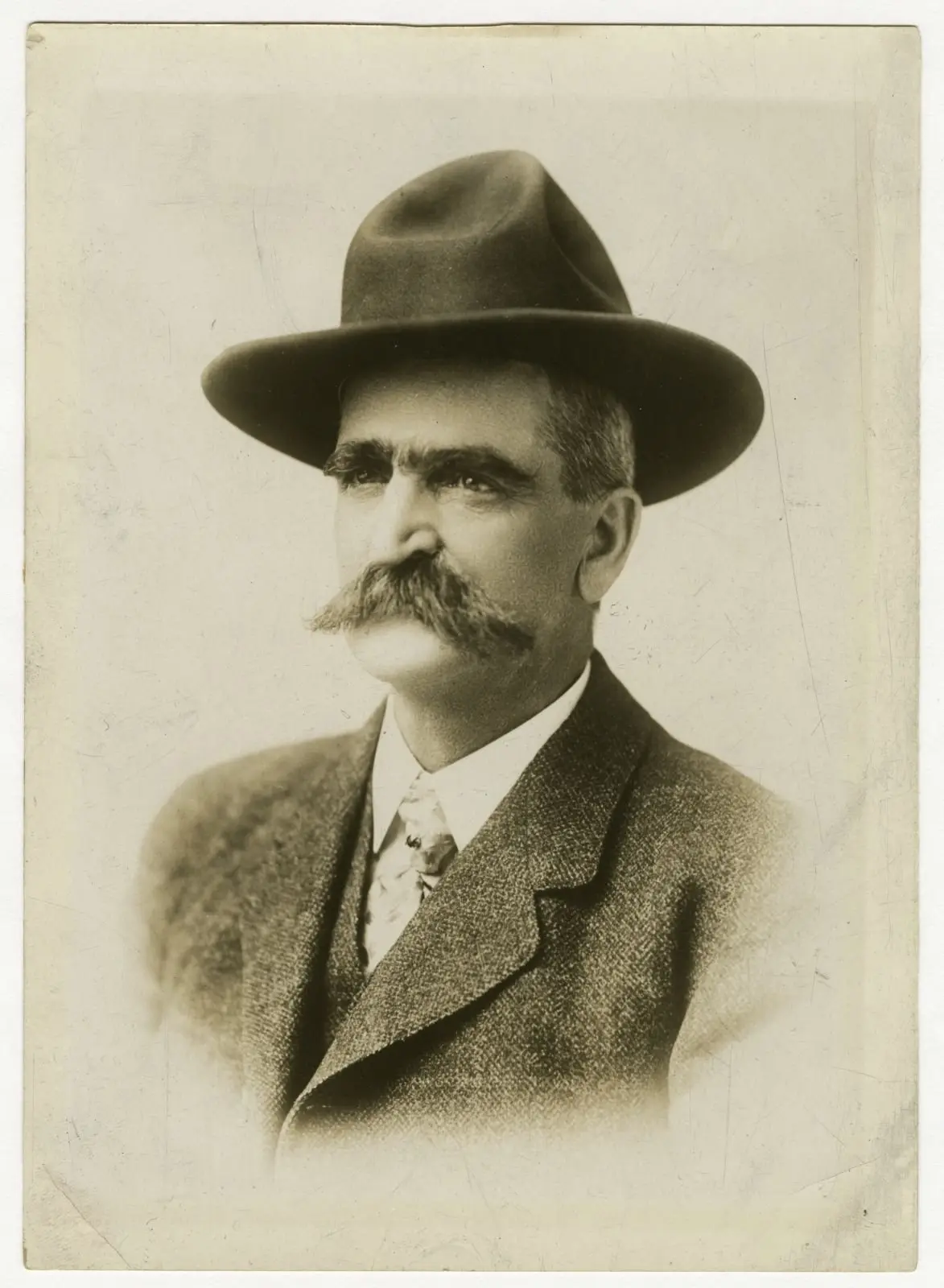
Seth Bullock was born in southern Ontario. The City of Deadwood’s Bullock brochure gives July 23, 1849, while South Dakota History and the city’s own tower history give 1847. He moved to Helena, Montana, as a young man, served in the territorial legislature and was elected sheriff of Lewis and Clark County in 1873.
Deadwood
He and his partner Sol Star brought a load of hardware into the gulch in August 1876, arriving within a day or so of Hickok’s murder. The city says August 1; a letter of Bullock’s cited elsewhere says August 3. Their store stood on the corner where the Bullock Hotel now stands.
The record is less cinematic than his television portrait. When Lawrence County was organized in 1877, Governor John Pennington appointed him sheriff, and his term lasted only about nine months. South Dakota History says he won his reputation by outwitting or staring down opponents rather than using a gun. The city’s favorite example is the Keets Mine in November 1877, when he reportedly ended an armed standoff with burning sulphur lowered down the shaft. The tale of his running Wyatt Earp out of town comes from his grandson.
Business and ranching
The partners diversified into mining, milling and ranching on the S-B stock ranch. Bullock helped found Belle Fourche by giving land to the railroad. After the fire of March 1894 took the store, they turned the surviving brick warehouse into the Bullock Hotel, and he sold it in 1904.
Roosevelt
Sources disagree on when the two men met. One city brochure says 1884, on the range near Belle Fourche; the city’s timeline and tower history say 1892. Roosevelt named him first supervisor of the Black Hills Forest Reserve in 1901 and U.S. marshal for South Dakota in 1905, the year Bullock brought a troop of cowboys to ride in the inaugural parade. During the Spanish-American War he was captain of Troop A in Grigsby’s regiment, which never reached Cuba.
After Roosevelt died in January 1919, Bullock led the effort to rename Sheep Mountain and build a tower there, dedicated on July 4. He died that September 23 and was buried above Mount Moriah Cemetery, within view of the monument.
Sources
- Seth Bullock brochure, City of Deadwood Archives
- Dakota Images: Seth Bullock, South Dakota History 20:1
- Mt. Roosevelt Tower: A Brief History, City of Deadwood Archives
- Seth Bullock, Wikipedia
- Deadwood's Bullock Hotel continues to stand as monument, Mitchell Republic
- Infamous Deadwood: Sheriff Seth Bullock, Deadwood Chamber of Commerce
- The Real Men of Deadwood, HistoryNet
- Timeline of Deadwood, South Dakota, City of Deadwood Historic Preservation Office