
Mount Moriah Cemetery
The hilltop cemetery that holds Hickok, Calamity Jane and Seth Bullock is also a record of the ordinary people and communities who built Deadwood.
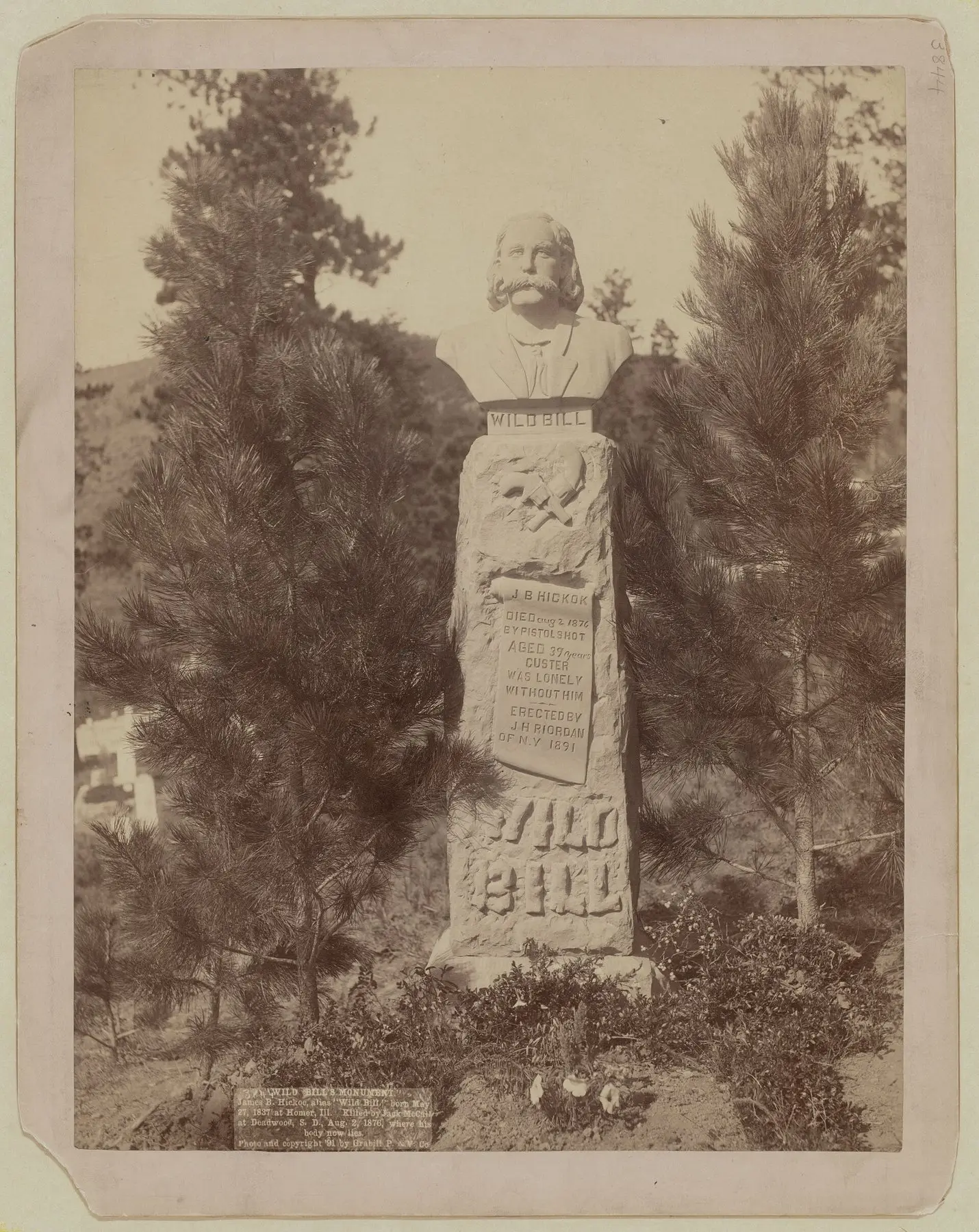
Mount Moriah is the cemetery most people mean when they speak of Deadwood’s Boot Hill, and the city’s own brochure uses the name “Black Hills Boothill.” Lawrence County bought the land in spring 1878 and established it that year. The first of 3,627 recorded burials, James Delong, took place on June 1, 1878, and the city warns that the real number may be higher because of lost and incomplete records. About half the graves have permanent markers.
A cemetery that replaced a cemetery
The first burial ground in Deadwood was on the mountain at the Ingleside camp. It filled quickly and the land became desirable for housing. Hickok and Preacher Smith were both buried there in August 1876, and many others too. Remains were dug up and moved to Mount Moriah over the following years, but not all of them. Unmarked graves were left behind, and human remains were found during retaining wall work in the Presidential Neighborhood on April 2, 2007, and again six years later at the same location.
The new cemetery was laid out in a Victorian oval divided into sections, with two potter’s fields on the north and south. Its name, the city explains, connects to the Biblical and Torah site in Jerusalem. The symbols on the gateway represent the Odd Fellows, the Freemasons and the Star of David.
Who owned it
Lawrence County ran the cemetery for fourteen years, and maintenance suffered. In 1892, concerned citizens took over as the Deadwood Cemetery Association. By the 1930s plots were filling up and revenue for upkeep was thin, so in 1938 the association deeded it to the city, which began promoting it as an attraction. It closed to new burials in 1949, with Oak Ridge taking over as the municipal cemetery.
The famous graves
Charlie Utter moved Hickok here in August 1879, into a plot with a cast-iron fence. The grave drew tourists right away, then vandals and souvenir hunters. Citizens commissioned a new memorial from James Riordan in 1890, the monument John Grabill photographed the next year. Since August 2, 2002, a bronze in its likeness has marked the spot.
Martha Canary was buried beside him in 1903, reportedly her dying wish. Historians doubt the romance the arrangement implies; WyoHistory documents little beyond their arrival together in 1876. Potato Creek Johnny, who found Deadwood’s most famous nugget, joined them in 1943. Seth Bullock lies apart, on a small plateau above the main cemetery, with a view across the gulch to the Roosevelt monument he built in the last year of his life. South Dakota History calls the place White Rocks. Preacher Smith and the madam Dora DuFran, buried with her husband and reportedly her parrot, are here too.
Two people you might expect here are not. Bullock’s partner Sol Star was buried in St. Louis, and Poker Alice in Sturgis.
The other sections
The less-visited parts of the hill may tell you more about the town. Four sections hold unknown people and settlers moved from Ingleside without markers. Wikipedia says another marks a lumber mill fire that killed eleven men in their sleep, a detail the city’s brochure does not mention. The children’s section records the typhus, cholera and smallpox outbreaks. Reports describe a Jewish section with many inscriptions in Hebrew, and a veterans section with government stones for men of the Civil War and the Indian Wars.
In 1908 Deadwood’s Chinese community built an altar and ceremonial oven in Section 6, and that area came to be known as the Chinese section. One account says the first Chinese burial recorded was on September 1, 1878, that about 33 Chinese migrants were buried here over roughly fifty years, and that most were later disinterred for return to China. Three graves remain. The Deadwood Historic Preservation Commission rebuilt the altar in 2013, using bricks saved from the Wing Tsue Emporium.
Restoration
By the 1960s the city had a master plan for the cemetery but little funding. It began charging entry in the mid-1980s to raise money. Real restoration had to wait for gaming. Starting in 1998, a five-year, $4.8 million project funded by the Historic Preservation Commission repaired monuments and retaining walls, paved the roads and improved drainage. The Hickok bronze, dedicated on August 2, 2002, was its crowning act.
If you visit
The Parks Department lists a $2 entrance fee, cash only, with the cemetery open daily from mid-May to mid-October, 8 a.m. to 8 p.m., and limited maintenance in winter. Hours and fees can change, so check with the city. It suggests allowing at least thirty minutes for the famous graves and a little longer for the overlook. The city’s brochure closes with a request worth repeating: this is sacred ground, so treat it that way.
Sources
- Calamity Jane: Heroine of the West or Ordinary Woman?, WyoHistory.org
- Mt. Moriah Cemetery brochure, City of Deadwood Archives
- Mount Moriah Cemetery, City of Deadwood Parks and Recreation
- Timeline of Deadwood, South Dakota, City of Deadwood Historic Preservation Office
- James Butler "Wild Bill" Hickok brochure, City of Deadwood Archives
- Martha "Calamity Jane" Canary brochure, City of Deadwood Archives
- Seth Bullock brochure, City of Deadwood Archives
- Mt. Roosevelt Tower: A Brief History, City of Deadwood Archives
- Mount Moriah Cemetery (South Dakota), Wikipedia
- Wild Bill Hickok in Deadwood, South Dakota Public Broadcasting
- Charlie Utter, Wikipedia
- Wild Bill Hickok, Wikipedia
- Sol Star, Wikipedia
- Potato Creek Johnny, Wikipedia
- Deadwood Cluster, General Commission on Archives and History, United Methodist Church
- Dora DuFran, Wikipedia
- Deadwood Historic District, National Historic Landmark nomination, National Park Service
- Dakota Images: Alice Ivers Tubbs, South Dakota History 40:1