
Martha "Calamity Jane" Canary
c. 1856-1903. Frontier personality and self-mythologizer
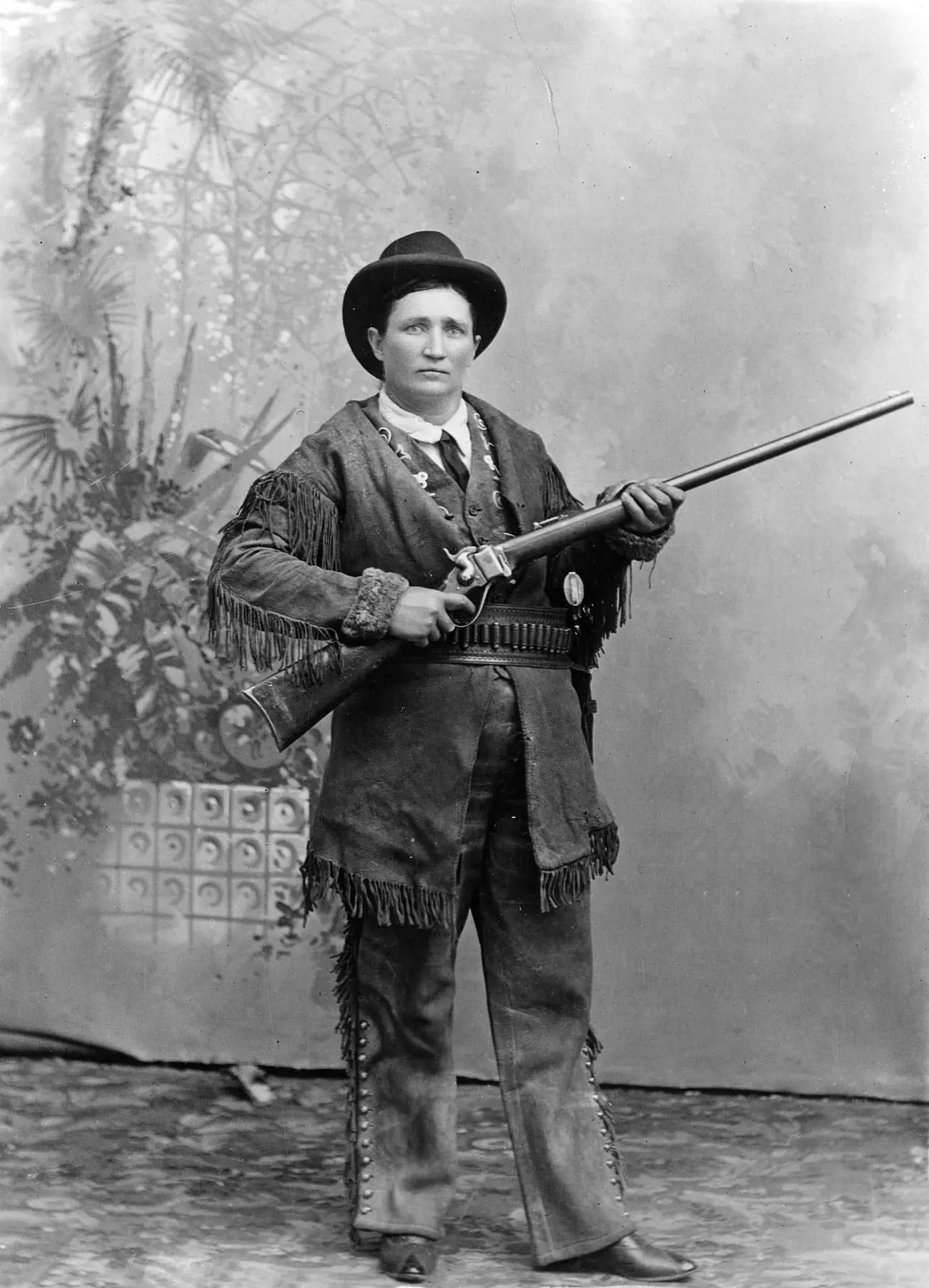
Martha Canary was born around 1856 near Princeton, Missouri. She claimed May 1 as the date, and the 1860 census fits the year. Her family headed for the Montana gold fields in the mid-1860s, and within a few years both parents were dead, leaving her orphaned and fending for herself in railroad towns and around military posts.
Name and fame
The first report in print to call her “Calamity Jane” appeared in the Chicago Daily Tribune on June 19, 1875, when she was with the Jenney expedition to the Black Hills. How she got the name is unknown. The City of Deadwood’s brochure repeats a story that Captain James Egan christened her after a rescue at Goose Creek, while the Encyclopedia of the Great Plains calls the origin uncertain. Edward Wheeler’s Deadwood Dick dime novels, starting in 1877, carried her to national fame.
What the record does not support
Historian James McLaird and WyoHistory draw a firm line between woman and legend. She said she scouted for General Crook; Captain Jack Crawford wrote in 1904 that Crook never hired her and ordered her out of camp. She claimed to have been Hickok’s wife, and no record has ever been found to support it. The Great Plains encyclopedia says their acquaintance lasted only a few weeks. Her 1896 autobiography, sold at her public appearances, was semi-fictional and probably ghostwritten.
The woman herself
What survives is both sadder and more interesting. She worked as a dance-hall girl, waitress and laundress, and reportedly as a prostitute. She rode into Deadwood with Hickok’s party in 1876. Accounts of her care for the sick, including during smallpox, run through her story; the city places this in 1878. A marriage certificate to William Steers dates from 1888, and a daughter, Jessie, was born in 1887. Alcoholism followed her throughout.
In 1901 she was exhibited at the Pan-American Exposition in Buffalo and left feeling used. She returned to the Black Hills in December 1902 and for a time worked at Dora DuFran’s place in Belle Fourche. She died at the Calloway Hotel in Terry on August 1, 1903, and was buried at Mount Moriah beside Hickok, reportedly her dying wish.